ROAS Break
Calculate how much each ad dollar must bring back for your shop's orders to make money
Foronline shops that pay for ads on Google, Meta or Amazon Web
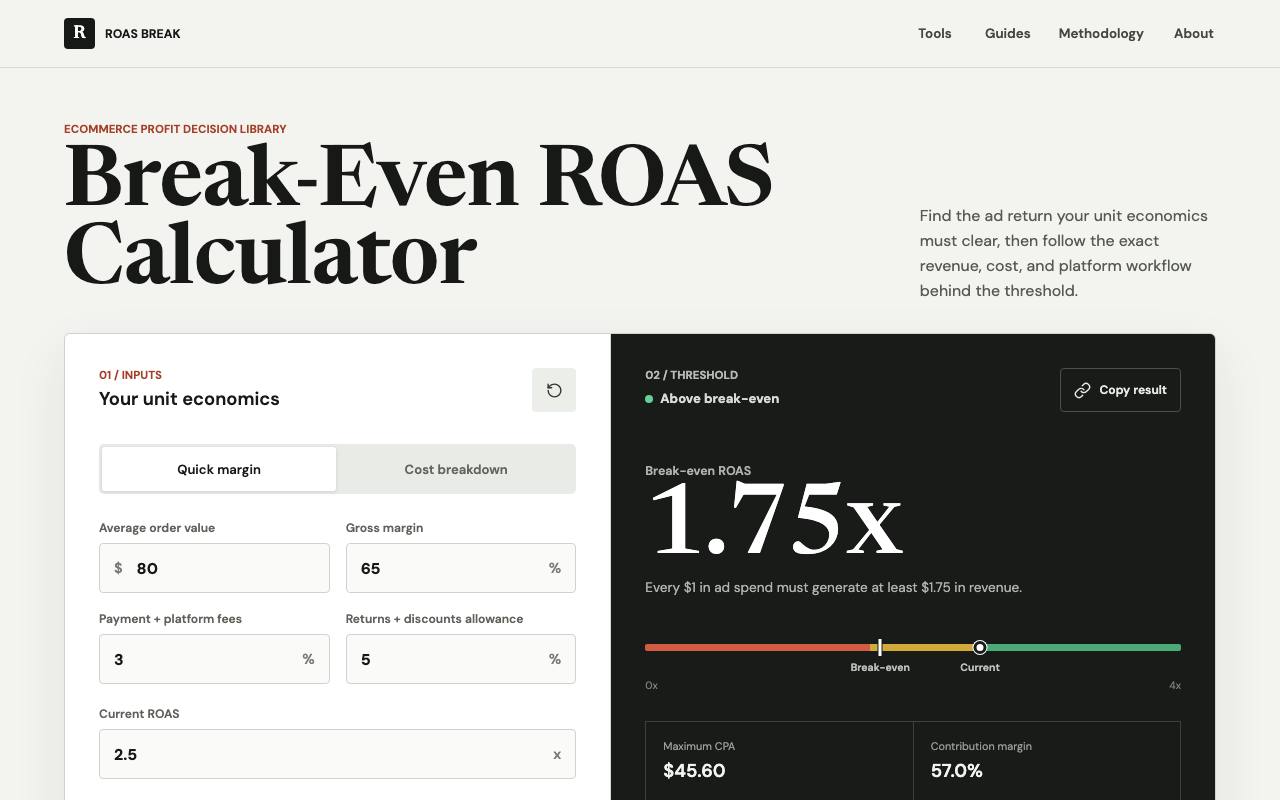
The ad dashboard reports three dollars back for every dollar spent, and the bank account disagrees. Ad platforms count the sales credited to an ad before product cost, shipping, payment fees and returns come off. ROAS Break starts from those costs and finds the return on ad spend (ROAS) an order must reach to earn anything.
The main calculator takes a single margin figure or a full cost breakdown per order. It returns that break-even ROAS along with the most you can pay for one sale. Five more calculators reuse the same numbers, including one for a profit target and a planner that compares budgets side by side.
The payback tool adds up what a new customer brings in after costs, at fixed points between 30 and 365 days. It shows the first of those points where the sum covers the cost of winning that customer.
The sums run in the browser, and the privacy page says inputs stay out of any account or database. About two dozen guides show where each input comes from, like the Shopify report that holds net sales. Others explain how each ad platform counts sales. Every page shows its formula, and a methodology page lists what the models leave out, such as fixed overhead and tax.
Good fit if you…
- need a profit floor before you raise ad budgets
- want to check whether a sale or discount still pays
Made ROAS Break? Get the badge
You're welcome to show the listing on your site. It's optional and free, and nothing about the listing depends on it.

Share the listing
More in E-Commerce
See all →
Ecommerce Data API
Check demand and competition for an Amazon product idea before you order the stock
Microcart
Build a web shop for your brand and run its orders and checkout yourself

Pangolinfo
Pull Amazon prices and bestseller rankings into your own software through an API

Resale IQ
Know the most to pay for a second-hand item before you buy it to resell on Vinted

Commerce Recovery
Ask a customer to pay for a delivered order after the bank took the money back