
CGPAtPercentage
Convert your CGPA into the percentage a form asks for, using your university's formula
Forstudents in India filling in applications Web
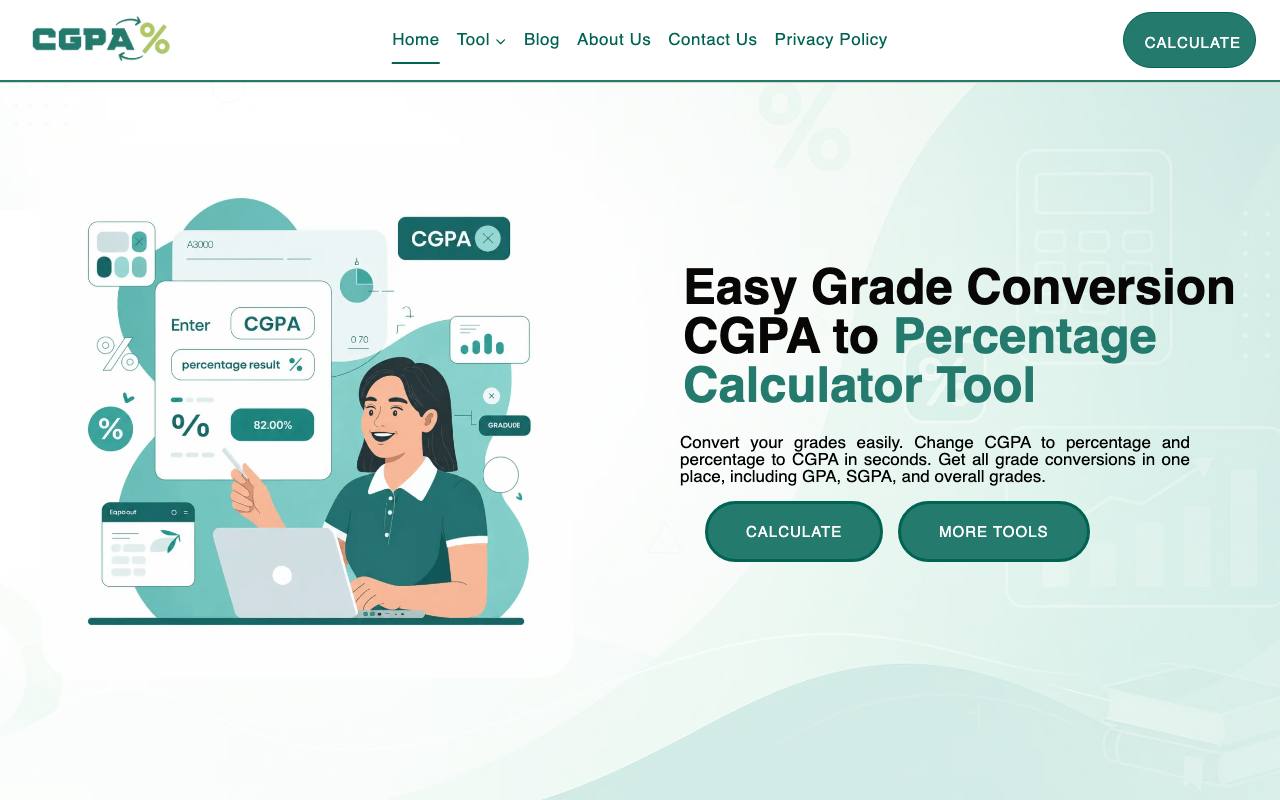
No two seniors agree on the number that turns a CGPA into the percentage a job application wants. On CGPAtPercentage you pick your university from a list, and the conversion uses its formula. The default multiplier is 9.5, and a custom field takes any other.
The formula is printed with every result, with your numbers in it. The 20 entries on the list are Indian universities and bodies, VTU, Mumbai University, SPPU and Anna University included. The same choice works the other way round, from a percentage back to a CGPA. Besides the usual 10 point scale, grades on 5 and 4 point scales are accepted.
Other calculators combine semester SGPAs into a CGPA or a percentage and add up marks across several subjects. The tools open in the browser with no sign-up. Blog guides give the formula and a conversion table for single universities and advise checking the exact rule with your own institute.
Good fit if you…
- need a percentage for a form while your marksheet only shows a CGPA
- study at an Indian university with its own conversion formula
Made CGPAtPercentage? Get the badge
You're welcome to show the listing on your site. It's optional and free, and nothing about the listing depends on it.

Share the listing
More in Education & Personal
See all →
AI Hairstyle Fit
See a new haircut on your own photo, then show the barber a card with cutting notes

AlcoList
Log each drink in a tap and see your weekly and monthly totals on a calendar
Eternal Memories
Keep a loved one's photos and life story on a memorial page that a QR code opens

Free Real Estate Exam Prep
Practice for the US real estate license exam and find your weak topics before test day

Lookslate
See six makeup looks before and after, then follow three steps to do one yourself