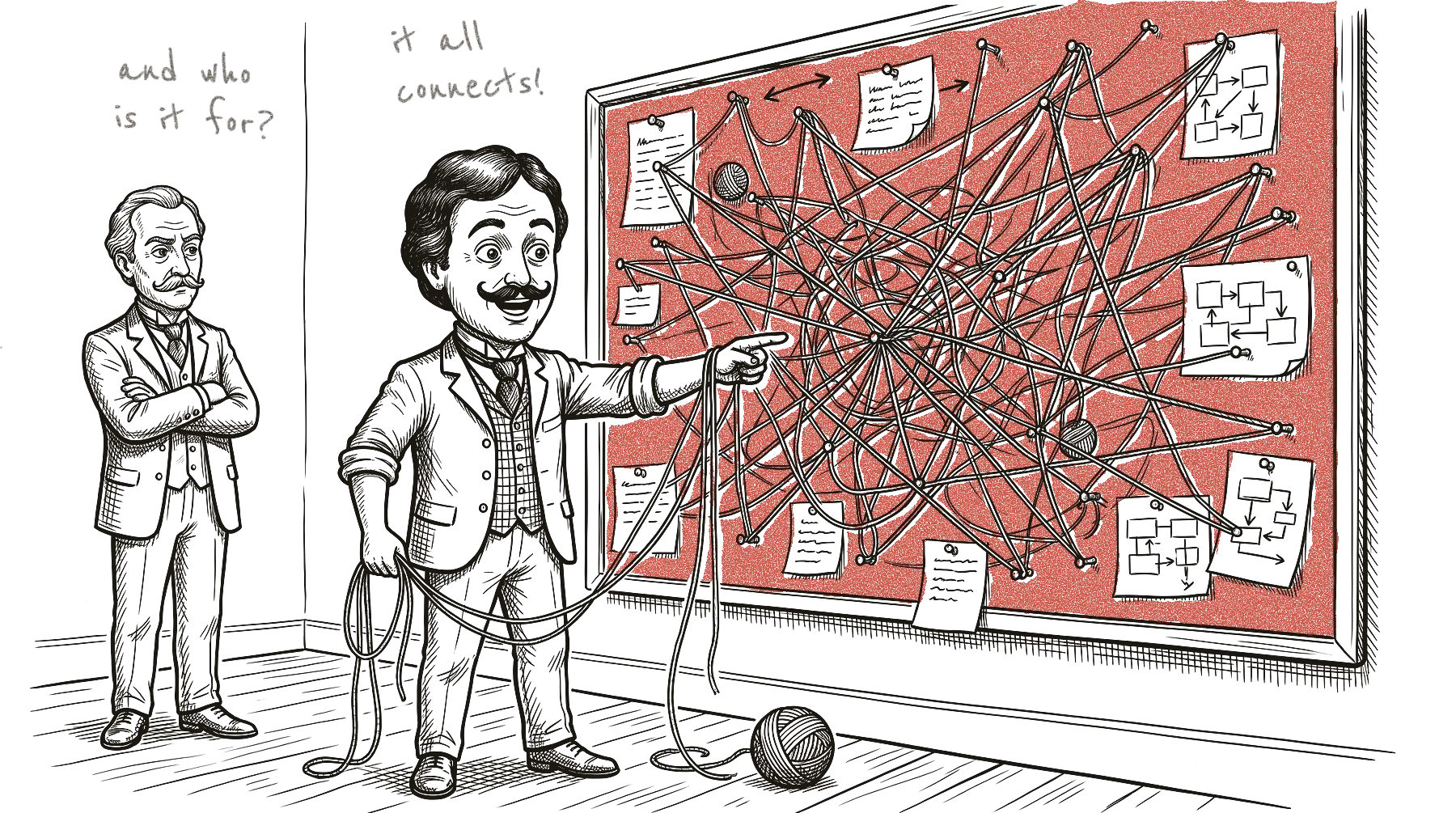
For readers By Rade Kolbas24 October 202610 min read
Facebook probably wasn't listening.Your TV was watching.
This week people dug into the software of their Samsung TVs and posted what they found. Here is what is proven, what is one person's unchecked claim, and the setting worth switching off tonight.
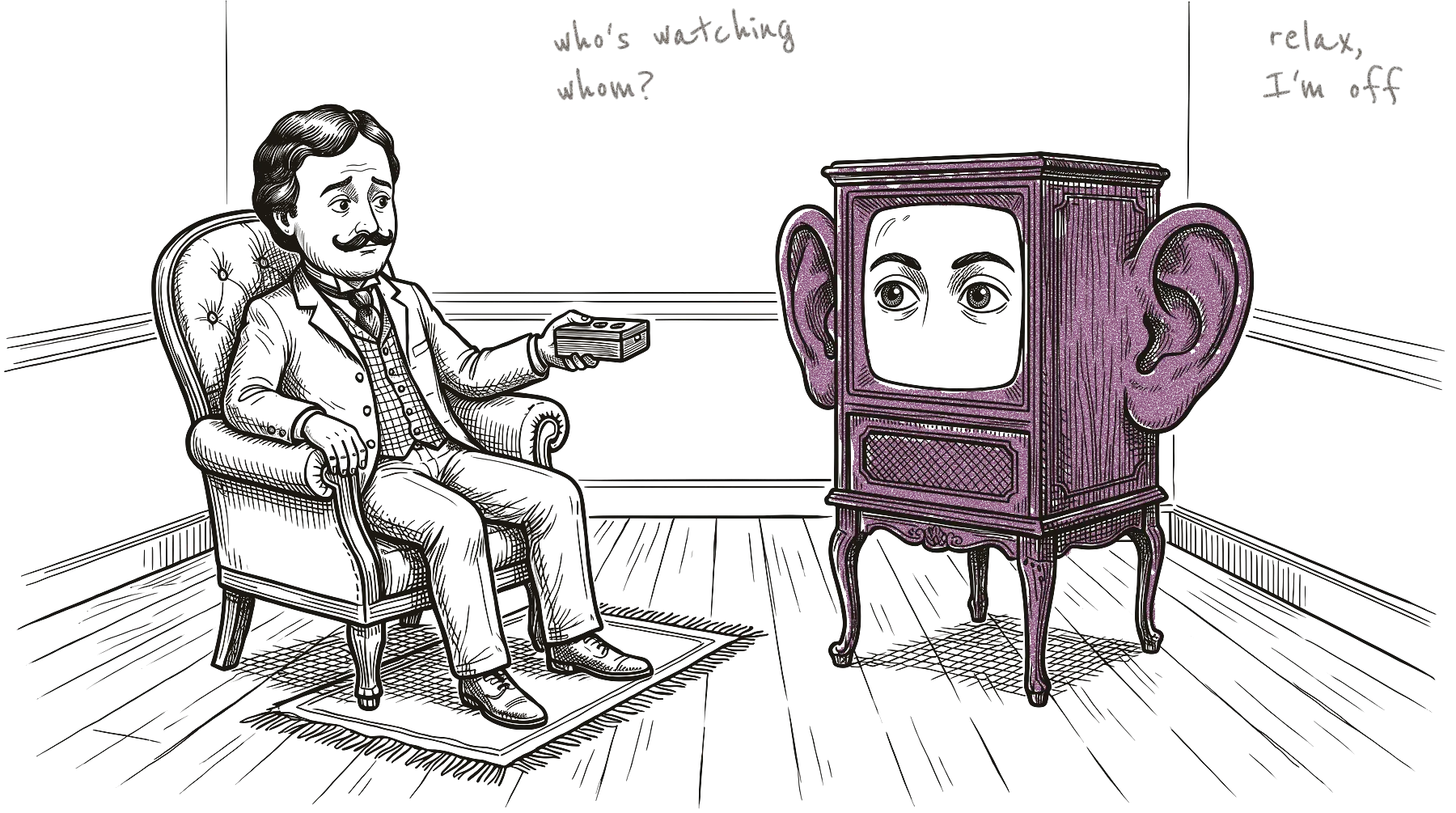
During the football, an advert for a new car comes on. You tell your partner it looks nice. The next morning, your phone shows you that car. For years, half the internet has been sure the phone was listening, and that Facebook was the one doing it.
This week my Twitter feed (it’s called X now) was full of a new suspect. People used AI coding tools to break into the software of their smart TVs and posted what they found. One post with two million views called it “samsung spyware”. Another widely shared post said the phone was never the one listening. The replies blamed the TV.
The timing is bad for me. My LG TV is several years old and has started to get the colours wrong, so I was about to buy a new one. My plan was a Samsung. Now I’ve put that purchase on hold until Samsung says something and I know what’s really going on, because I don’t want to bring something into my living room that listens to me all day.
So I went through the posts, the studies and the lawsuits. Some of it is proven, in Samsung’s own words. Some of it is one anonymous person’s claim that nobody has checked yet. The setting worth changing tonight is at the end.
Your TV checks what’s on the screen
Most smart TVs have a feature called automatic content recognition, or ACR. It works like Shazam, the app that names a song, but for the screen. The TV takes a snapshot of the picture and turns it into a fingerprint, a short code that stands for that image. The code goes to a server on the internet, which compares it with a library of shows, films, games and adverts. Now the company knows what you are watching.
You don’t have to take an activist’s word for it. Samsung described it to advertisers in its own guide in 2022:
“Our proprietary ACR technology takes glass-level screenshots every 500 milliseconds on our opted-in Samsung TVs.”
Samsung Ads ACR Guide, 2022
“Glass-level” means the picture exactly as it appears on the screen. Every 500 milliseconds means twice a second. “Opted-in” means you said yes. Usually that was one of the screens with a long text and an “Agree” button that you clicked through when you set up the TV. Samsung says the fingerprints are codes that no person can read, and that it does not “record or watch” what’s on your screen. Fine, but it still knows the programme.
It also works on things you plug in. A 2024 university study found that ACR keeps running when the TV only shows a games console or a laptop. Anything you connect with a cable counts.
How the TV gets the car onto your phone
Your TV and your phone use the same home internet connection. To the outside world, both come from the same address, called the IP address. Advertisers use that address to tie the devices in one home together.
This has been proven before. Vizio is a big TV brand in the US. In 2017, the US consumer protection agency found that Vizio had collected viewing data from 11 million TVs without people knowing. It had also given the internet addresses of those homes to a data company that could work out which household they belonged to. Vizio paid $2.2 million to end the case.
An advertising industry guide from 2019 describes the same method. Samba TV, a company whose ACR runs on many TVs, finds “smartphones that use the same IP address as the smart TV” and shows them ads.
So back to the car. Nobody needed a microphone. The TV saw the car advert during the football, and the shared address is enough to link your TV to your phone. That’s how the same car can turn up on the phone the next morning. You just remember the part where you said it out loud.
Was the phone listening after all?
I don’t think so, and neither do the people who tested it. Facebook said in 2016 that it does not use your phone’s microphone for ads. In 2018, researchers at Northeastern University in Boston looked at more than 17,000 Android apps and ran about 9,100 of them. They saw none send audio. That isn’t proof it never happens, but it’s a lot of looking.
The fear didn’t come from nowhere, either. In 2024, the US media company Cox Media Group tried to sell advertisers a product called “Active Listening”. It promised ads chosen by what device microphones heard, though the details were never proven. Nobody has shown that it ever worked, and Google removed the company from its programme for advertising partners after reporters asked about it.
What the Samsung posts show, and what they don’t
The “samsung spyware” post came from a developer. He says an AI tool helped him get full control of his Samsung TV, the kind of access the maker normally locks away. Then he switched off the screen fingerprinting. He also switched off the wake word, the word like “Hey Bixby” that a voice assistant listens for.
News sites link his post to a set of notes on GitHub, a website where programmers share code. Those notes are calmer than the post. They say no camera spying or constant room recording was shown, and that you don’t need to hack the TV to switch ACR off.
The scarier claims come from a second person, an anonymous researcher who says he broke into a 2025 Samsung TV. Since 21 October he has posted things he found in its software. Among them are a microphone that is always on, and sound recognition that counts dog barks and crying babies. On Saturday he posted pages from a longer report that his AI tools are helping him write. One page says that in the code he read, Samsung’s screen recognition starts up even when you have said no to the viewing agreement. His own page labels this as untested on a running TV. If it holds up, it would fit the study further down, which found Samsung TVs still sending this kind of data after people switched it off.
A second person who also got full access to his own Samsung TV checked one of the claims. He confirmed a service that can record your network traffic and send it to Samsung’s remote support. Whether Samsung can switch it on without asking you, he wrote, he hasn’t proved.
That was enough to set Twitter on fire. Developers wrote that Samsung should be prosecuted if the claims are true. By the evening of 24 October, there was still no full report and Samsung still hadn’t commented.
Finding code in the software doesn’t prove the feature is switched on. And neither proves that anything leaves your house. A TV with a microphone is expected to have sound code.
Samsung even advertises some of it. On its 2025 TVs, a feature called Pet Care can “detect noises like barking through its microphone” while you’re out. The small print says it “only works when the TV is turned off”. So “off” doesn’t always mean off.
Whether any of this runs without your consent is the open question. In Europe, data protection law says this kind of tracking needs your permission, so a TV that keeps reporting after you said no would be a case for the regulators. I’d rather wait for proof than repeat every claim as fact, but I’d also like Samsung to answer.
Does switching it off help?
On most brands, yes. A study published this week by Northeastern University tested 12 TV models from 10 makers sold in the US, in almost 6,000 experiments. The researchers watched the data each TV sent over the internet, with ACR switched on and off.
- LG, Sony, Amazon Fire TV and Hisense TVs with Hisense’s own system (VIDAA): switching ACR off stopped the ACR data.
- Roku: it mostly stopped.
- Samsung: data that looks like ACR kept flowing in more than 60% of the situations they tested.
- Vizio: switching it off made no visible difference.
That’s good news for my old LG, at least if it behaves like the models they tested.
The data is encrypted, locked so outsiders can’t read it, so the researchers write that they “cannot know for certain” what’s inside. On Samsung and Vizio, though, the switch doesn’t seem to do everything it promises.
Courts are starting to take an interest. In December 2025, the state of Texas sued Samsung, Sony, LG, Hisense and TCL over ACR. Samsung and LG made a deal with the state and must now ask people in Texas for permission first. Samsung said its TVs “do not spy on customers”. I found no case in Europe yet.
What to do tonight
- Switch off ACR. It sits in the privacy settings. Menus differ by model and year, and yours may be in another language, so look for the words in the list below the steps.
- Check again after updates. The GitHub notes warn that a software update can switch settings back on.
- On Samsung or Vizio, consider taking the TV off the internet. In the network settings, remove the Wi-Fi connection, or pull the network cable. Then watch through a separate streaming box or stick, a small device that plugs into the TV and runs Netflix and the other apps. The box will know which apps you use, but the TV can no longer report what’s on its screen. Samsung itself told worried customers in 2015 that they could disconnect the TV from the internet.
- Don’t hack your TV because a post told you to. Some people now share scripts that let an AI tool strip a TV’s software down. The popular ones only work on TVs that run Android, like Google TV and many Sony models, and some have left TVs that no longer start properly. The official switch is safer.
Where to find the switch
- Samsung: Settings > All Settings > General & Privacy > Terms & Privacy. Turn off “Viewing Information Services”. While you are there, also turn off “Interest-Based Advertisements”, which uses the data for ads.
- LG: Settings > All Settings > Support > Privacy & Terms > User Agreements > “Viewing Information”.
- Vizio: Settings > Admin & Privacy > “Viewing Data”.
- Sony: Settings > Privacy > “Samba Interactive TV”.
- Roku: Settings > Privacy > Smart TV Experience > “Use Info from TV Inputs”.
- Fire TV: Settings > Preferences > Privacy Settings > “Collect App and Over-the-Air Usage Data”.
- Hisense and TCL: the menu depends on the system your TV runs (Google TV, Roku, Fire TV or VIDAA). Look for “Viewing” or “Content Recognition” under privacy.
So when the ads seem to know what you watched last night, look at the screen you watched it on before you blame the phone in your pocket.
Sources
- Samsung Ads, “ACR Guide” (Canada), 2022; Samsung US support, “Samsung Smart TV Automatic Content Recognition (ACR) Feature” (read on 24 October 2026); Samsung Ads Privacy Notice EU, 23 June 2025
- Gianluca Anselmi and others, “Watching TV with the Second-Party: A First Look at Automatic Content Recognition Tracking in Smart TVs”, IMC 2024
- Ilgar Mammadov, Het Rutul Joshi, Daniel J. Dubois, David Choffnes (Northeastern University), “Watching the Watchers: Privacy Analysis of U.S. Smart TV Automatic Content Recognition”, to appear at PETS 2027, released October 2026
- US Federal Trade Commission, “VIZIO to Pay $2.2 Million to FTC, State of New Jersey to Settle Charges It Collected Viewing Histories on 11 Million Smart Televisions without Users’ Consent”, 6 February 2017, and the complaint
- AdExchanger, “The Marketer’s Guide To ACR Tech In Smart TVs”, 26 June 2019
- Elleen Pan and others (Northeastern University), “Panoptispy: Characterizing Audio and Video Exfiltration from Android Applications”, PETS 2018; Facebook newsroom statement, 2 June 2016
- 404 Media, “Here’s the Pitch Deck for ‘Active Listening’ Ad Targeting”, 26 August 2024
- Texas Attorney General, press releases of 15 December 2025 and 11 May 2026; The Record, on Samsung’s settlement, 27 February 2026
- Jake Stevens on X, 21 October 2026; the “quiet-tizen” project on GitHub; @log4j on X, 21 to 24 October 2026, including report pages posted on 24 October; @mrownz123 on X, 23 October 2026 (all read on 24 October 2026)
- Samsung Newsroom Singapore, “Samsung Electronics introduces its most advanced TVs and soundbars yet, powered by Vision AI”, 1 June 2025
- PCWorld, “Please don’t use AI hacks to debloat your TV”, 22 October 2026
- Consumer Reports, “How to Turn Off Smart TV Snooping Features”, updated 19 October 2025
- Christian Science Monitor, “Samsung explains why its SmartTV records private conversations”, 10 February 2015