For makers By Rade Kolbas22 October 20264 min read
Your product is for everyone.So nobody feels it's for them.
Why "everyone" is the worst customer you can pick, how to find the few people who actually need your product, and where they hang out.
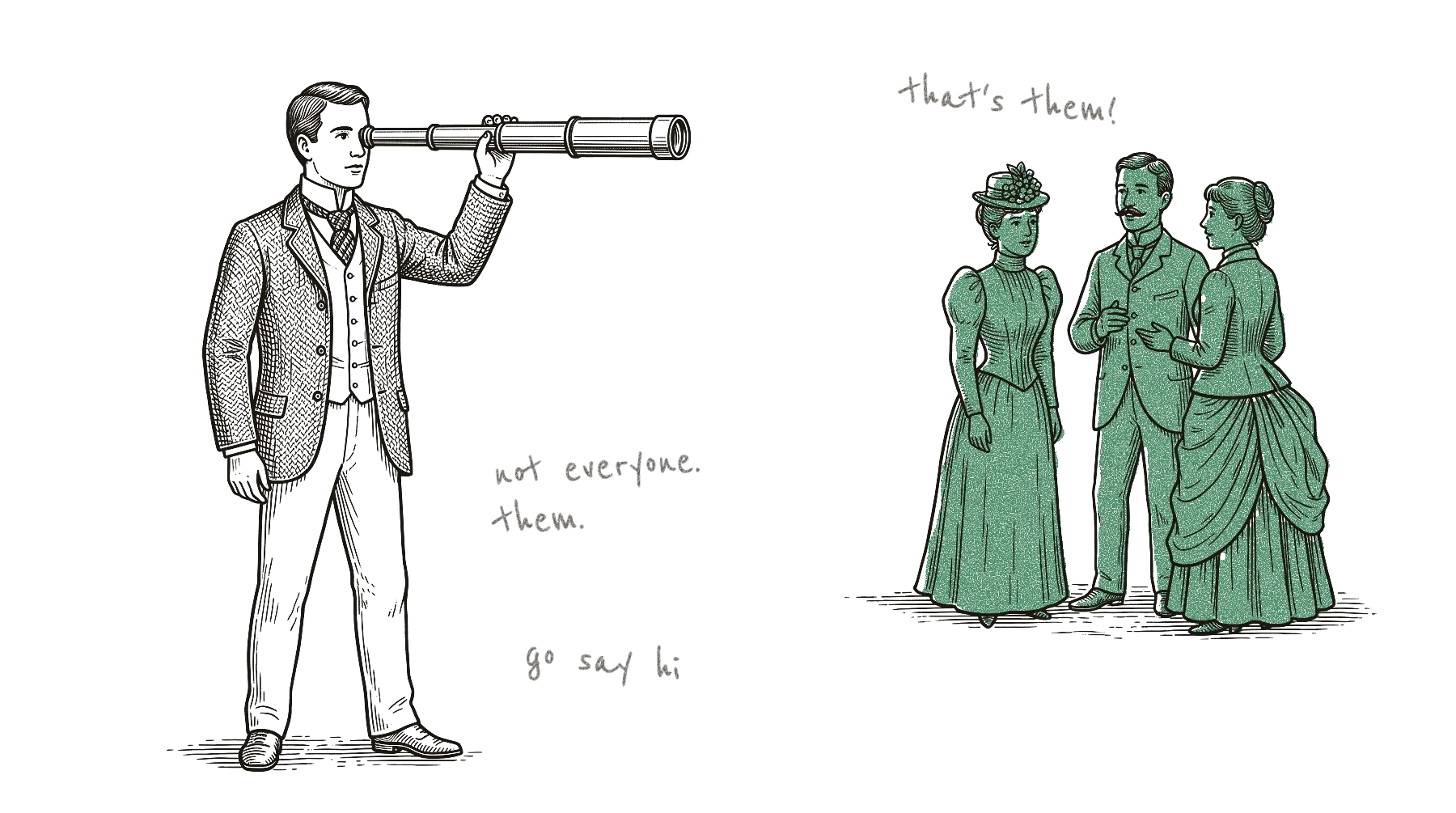
“So, who is your product for?”
“Everyone!”
I read this a lot on homepages. Everyone who sends invoices. Everyone who has a website. Everyone who is alive and owns a credit card. It sounds like a huge market. In reality, it’s a message nobody recognises as theirs. People skim right past it, because nothing in it says “hey, this is about you”.
Running this directory, I read a lot of homepages written for “everyone”. So let’s fix that. You need a target group: the people your product is really for. Here is how to find them, and where they hang out.
What a target group is (no, it’s not “men aged 25 to 45”)
A target group is a bunch of people in the same situation, with the same problem. Their age and job title matter much less than the situation. Three questions get you there:
- When does the problem show up? What are they trying to do at that moment?
- How much does it hurt? How often does it happen, and what does it cost them?
- Where are they? Where do these people meet, read and ask for help?
Compare “small businesses” with “owners of small cleaning companies who write their invoices on Sunday evenings and then wait weeks to get paid”. The first is a category in a spreadsheet. The second is a person you could buy a coffee for. You know what bothers them, and you can guess where to find them.
How to find your people
- Describe one person in one sentence. For example: “A freelance designer who sends about ten invoices a month and loses track of who has paid.” Can’t write that sentence yet? Then that’s your homework, before any marketing.
- Look at who already showed up. If you have users, or people who signed up or wrote to you, list them. What do they have in common? Their job, their situation, the moment they started looking for help. No users yet? Think of the last three people who complained to you about the problem.
- Check that you can reach them. Search the web for the problem in plain words, plus “forum”, “group” or “community”. Found places where these people talk? Great, you can reach them. Found nothing? Try the words your users would use, or make the group more specific.
- Talk to them about their life, not your idea. Ask what they did the last time the problem came up. Don’t ask whether they like your idea, because people are far too polite. They’ll say “sounds great!” and never sign up. What they actually did last week is much harder to fake. This is the main advice of a popular little book on customer conversations, The Mom Test by Rob Fitzpatrick. The idea behind the name: even your mum, who loves everything you do, can’t fake what she actually did last Tuesday.
Where they hang out
People with the same problem almost always gather somewhere. Start here:
- Reddit, a huge website made of discussion forums on almost every topic. Search it for your problem to find the right forums. Each forum has its own rules, and Reddit’s general rules ask people to take part honestly and not to spam.
- Facebook groups, LinkedIn groups and Discord servers (online chat communities) for one profession or one hobby.
- Professional associations, for bakers, landlords, accountants, you name it, with their newsletters and events.
- Small newsletters and podcasts your people already read or listen to.
And please, read for a while before you post. Help where you can. Mention your product only when it actually answers someone’s question. People notice a sales pitch very quickly, even three posts away.
”But a small group means fewer customers!”
I get it. Picking a small group feels like turning money away. In practice, I think it’s often the fastest way to get any customers at all.
There’s a famous story the Harvard professor Clayton Christensen liked to tell. A fast-food chain wanted to sell more milkshakes. Asking customers about the perfect milkshake did nothing. Then a researcher simply watched who bought them: about 40 percent were sold early in the morning, to commuters with a long, boring drive ahead. Not “people who like milkshakes”. Tired commuters who wanted something to keep them busy until the office. Once you see a group that clearly, you know what they need and what to tell them.
Paul Graham, who helped start a lot of young software companies, said it more bluntly:
“It’s better to make a few people really happy than to make a lot of people semi-happy.”
Paul Graham, “Startups in 13 Sentences”, 2009
Facebook started only for students at one university, Harvard. Small group first, then it grew from there. A small group that loves you also tends to talk about you, and to tell you what to fix.
Put it on your homepage
Finish this sentence: “This product is for [a specific person] who [is in a specific situation].” When it comes easily, put it near the top of your homepage. Not in the footer. Not on page four.
It helps with directories too. On SaaSolution, each listing has a short “For” line that says who the product suits. When your website says it clearly, I can repeat it, and the right readers recognise themselves at once. When it says “everyone”, the right readers walk past.
Sources
- Carmen Nobel, “Clay Christensen’s Milkshake Marketing”, Harvard Business School Working Knowledge, February 2011
- Paul Graham, “Startups in 13 Sentences”, February 2009, and “Do Things That Don’t Scale”, July 2013: paulgraham.com
- Rob Fitzpatrick, The Mom Test: momtestbook.com
- Reddit Rules: redditinc.com/policies/reddit-rules (read 22 October 2026)