For makers By Rade Kolbas22 October 20264 min read
The problem isyou never talk about the problem.
You explain features. Your customer is waiting for one sentence that proves you understand what is going wrong for them. Here is how to write it.

Open the homepage of many new software products and you’ll find something like this:
“An AI-powered invoicing platform with automated workflows and 40+ integrations.”
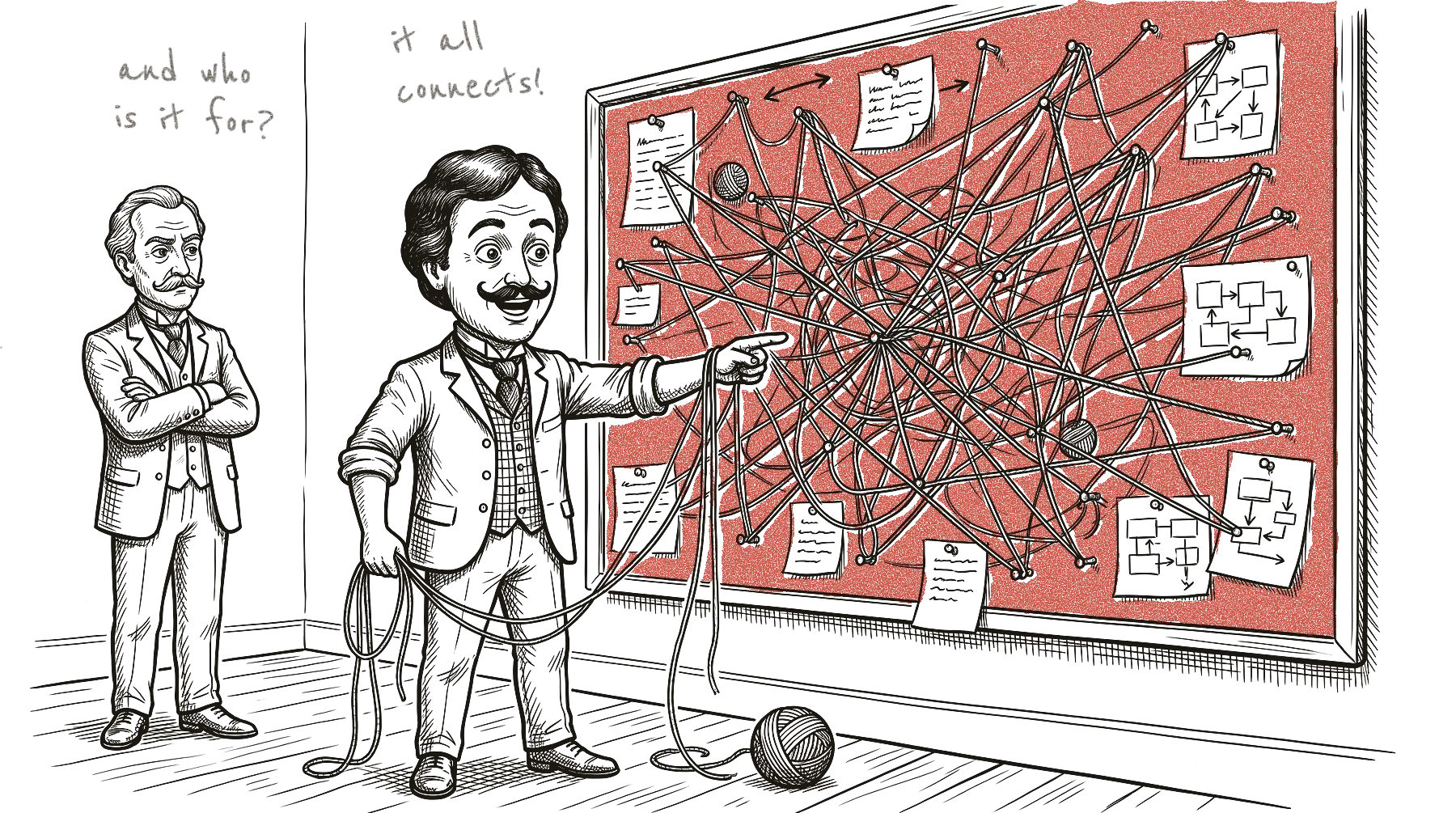
Sounds impressive. But what does it do for me? The sentence describes the tool in loving detail. What it doesn’t say is what goes wrong for the customer. So the visitor has to work that out alone, and I suspect most can’t be bothered.
Now try this one: “Clients pay late, and you spend your Friday afternoons writing reminder emails.”
Ouch. That one names a real problem. The right reader nods, and now the rest of the page can explain how the product helps. That nod is what this whole post is about.
The nod is half the sale
I’ve spent many years in product and marketing work. One pattern came up in my customer conversations again and again. The moment I described someone’s problem in a way they recognised, they started to nod. And from that moment on, the rest of the conversation got a lot easier.
Why? I think it’s simple. If you understand my problem, I assume you probably have a good answer to it too. That’s not always true, of course. Plenty of products understand the problem perfectly and then solve it badly. But people only start listening to your solution after they feel understood.
Research on relationships points the same way: feeling understood builds trust and makes people like each other more. One review adds a warning, though: feeling understood and actually being understood are not the same thing. So don’t just sound understanding. Do the homework. Then say it out loud.
How to write the problem sentence
- Leave your product out. One sentence about the problem. No product name, no technical words. If you need your product to explain the problem, you’re describing the solution again.
- Steal your customers’ words. From conversations, support emails, reviews and forum posts. No customers yet? Read reviews of similar products and forum threads where people complain. Nobody says “workflow inefficiency”. They say “I spend every Friday afternoon chasing unpaid invoices.”
- Be specific. Who has the problem, when does it happen, and what does it cost them: time, money, sleep, a client?
- Test it on a real person. Say the sentence to someone who has the problem. If they say “exactly!”, you’ve got it. If they correct you, write down their version. It’s usually better than yours. Annoying, I know.
- Put it first. The problem sentence goes at the very top of your homepage and in the first line of every description of your product. Not after the logo wall. Not after the “trusted by” section. First.
So why does everyone skip it?
Because you know too much. You’ve lived with the problem for months or years. To you it’s so obvious it isn’t worth mentioning, and the solution is the exciting part. Psychologists have a name for this: the curse of knowledge. Once you know something, it’s really hard to imagine not knowing it.
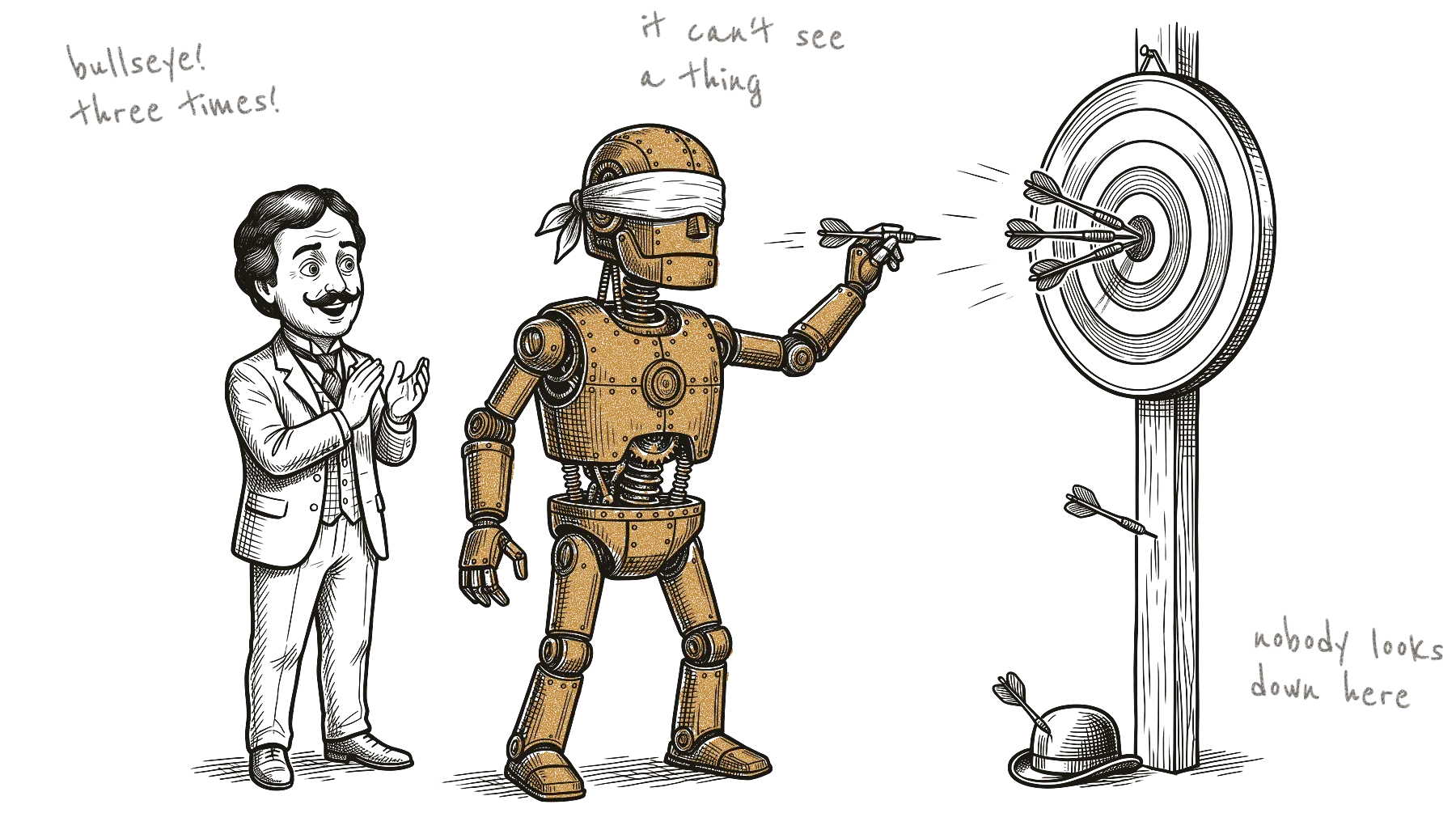
My favourite proof is a small experiment from Stanford University. One person tapped the rhythm of a well-known song on a table, and another person had to guess the song. The tappers expected the listeners to get it right half the time. The listeners got 3 songs out of 120. Three! The tappers heard the full melody in their heads. The listeners heard someone knocking on a table.
“Our knowledge has ‘cursed’ us.”
Chip and Dan Heath, “The Curse of Knowledge”, Harvard Business Review, 2006
Your product page is that table. You hear the melody. Your visitor hears knocking: features, technical words and a product name they’ve never seen.
Nobody wants your drill
There’s an old marketing saying: people don’t want a drill, they want a hole in the wall. Later, the Harvard professor Clayton Christensen put it like this: customers “hire” a product to get a job done, the way you’d hire a plumber to fix a leak. Nobody hires a plumber because they love their tools.
Your features are the tools. The job, and the problem behind it, is what people pay for.
That’s also why every description on SaaSolution starts with the problem the product solves. Not because I’m a genius. Because I got tired of reading “AI-powered platform” and still not knowing what anything does.
Sources
- Chip Heath and Dan Heath, “The Curse of Knowledge”, Harvard Business Review, December 2006 (on Elizabeth Newton’s experiment at Stanford, around 1990)
- Sylvia Morelli, Jared Torre and Naomi Eisenberger, “The neural bases of feeling understood and not understood”, Social Cognitive and Affective Neuroscience, 2014
- Harry Reis, Edward Lemay and Catrin Finkenauer, “Toward understanding understanding: The importance of feeling understood in relationships”, Social and Personality Psychology Compass, 2017
- Quote Investigator, “People Don’t Want to Buy a Quarter-Inch Drill. They Want a Quarter-Inch Hole!”
- Clayton Christensen, Taddy Hall, Karen Dillon and David Duncan, “Know Your Customers’ ‘Jobs to Be Done’”, Harvard Business Review, September 2016